
Up from the basement
Budapest 80 years ago

This is a personal post, maybe a one-off. If you are following me because of the work Péter Király and I are sharing here, please subscribe to our Patterns of Translation substack—just scroll down to the link at the end of this post.
I was reading a short essay by Krisztián Ungváry on the Hungarian news site Telex, published for the 80th anniversary of the siege of Budapest. Ungváry is one of the most important historians writing in Hungary now—a serious scholar who also does public history. His first book was a meticulous account of the siege (there is an English translation from Yale); a lot of it is military history but it has 120 pages about the experience of the civilians.
In the essay, Ungváry samples diary entries about the experience of one of the bloodiest battles of WW2. As a military operation, the siege of the Hungarian capital was comparable to that of Stalingrad—except the city on the Volga was evacuated, the city on the Danube was not. Close to a million civilians remained there, most of them sheltering in the basements of big apartment buildings, while 250,000 soldiers were devastating the city and each other. The total number of casualties was around 200,000—soldiers and civilians, including the Hungarian Jews murdered by the Hungarian fascist militia.
Warsaw had it worse, of course. As have other cities since. This is not meant to be an entry in a contest: I am just offering more familiar comparisons from the period.
The illustrations of Ungváry’s piece came from the site fortepan.hu, a community-based open access online archive of donated photos (at this point about a quarter of a million of them) with metadata (donor name, date, location, subject tags) maintained and added by volunteers. (Forte by the way was the name of a photochemical factory in Vác, Hungary. Fortepan was their most widely known product, the B&W negative film amateur photographers used throughout the second half of the 20th century.) This made me want to poke around a bit in that archive, look at the ruins of 80 years ago.
I grew up listening to my grandmother talking about the siege. I heard her stories so often that I had to work hard to forget most of them, but I somehow managed. Boys in their teens are horrible beings. But the apartment building in whose basement they spent those months is still there, and recently, we visited with my mom. She was also there 80 years ago with my grandmother (my grandfather had been drafted: at this point, they had no idea whether he was alive, and if so, where). She wasn’t 3 months old when the Red Army surrounded the city.
This was one block away from where she spent December 1944-February 1945:
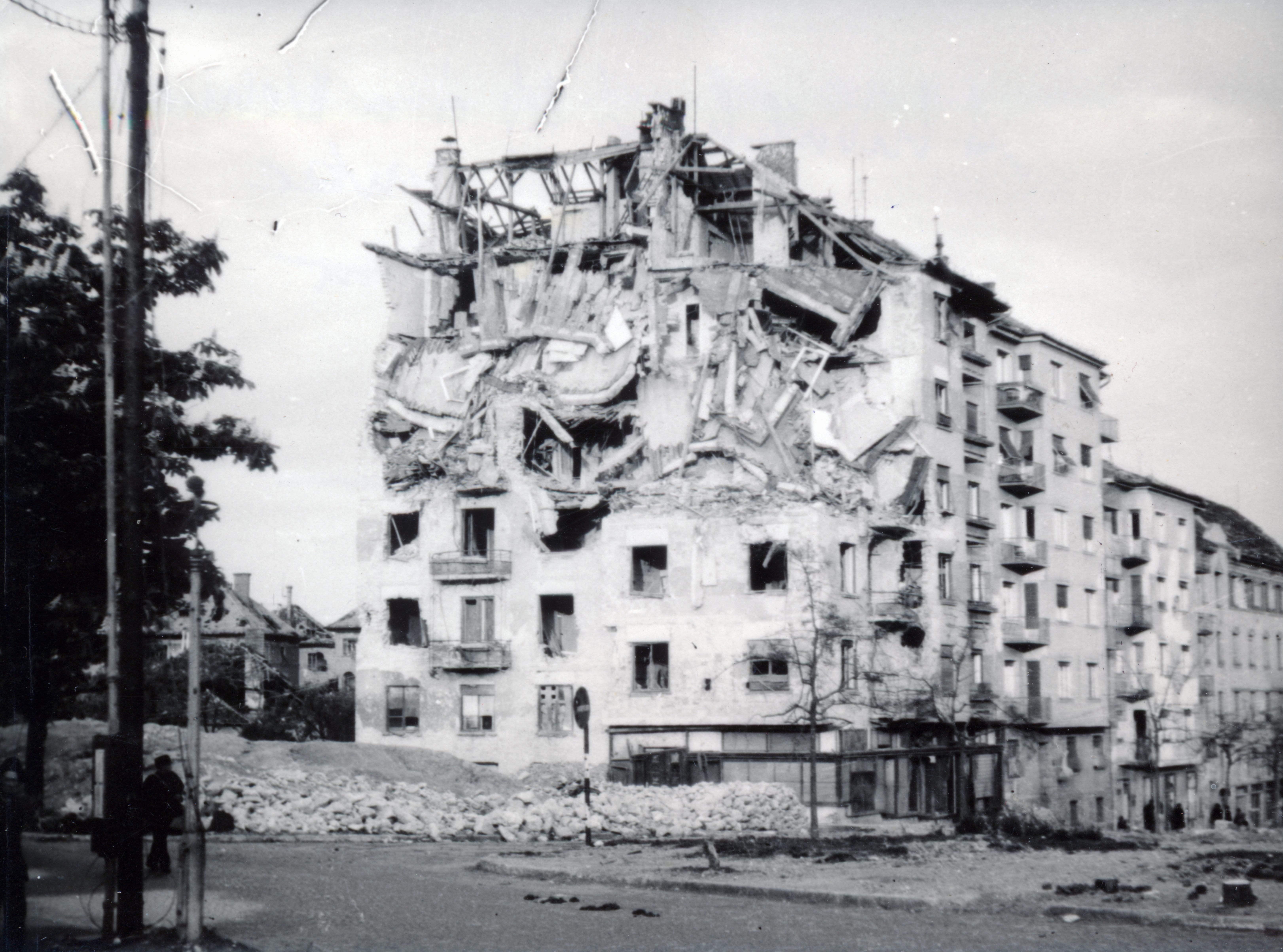
Their building only sustained minor damage. But the months they spent in the basement was the most important memory of my grandmother’s adult life.
It was actually the basement of the apartment building next door, because theirs was not deemed deep enough to be safe as a shelter. So there was the story about how they were not welcome over there.
I recently saw Sergei Loznitsa’s docudrama Donbass. There is a long sequence about people living in a shelter like that. It seemed claustrophobic. In the movie, people sleep on bunk beds. There were no beds in the basement in Németvölgyi út. There was the story about how not only my 30-year old grandmother and her recently divorced sister, but also my great-grandparents, and another, even older female relative slept during the entire time sitting up on chairs, in their winter coats. There was also the story about my mother disappearing from the top of a pile of firewood where they put her down. They found her when they heard her crying from behind the pile: she slid down into the gap between the logs and the wall.
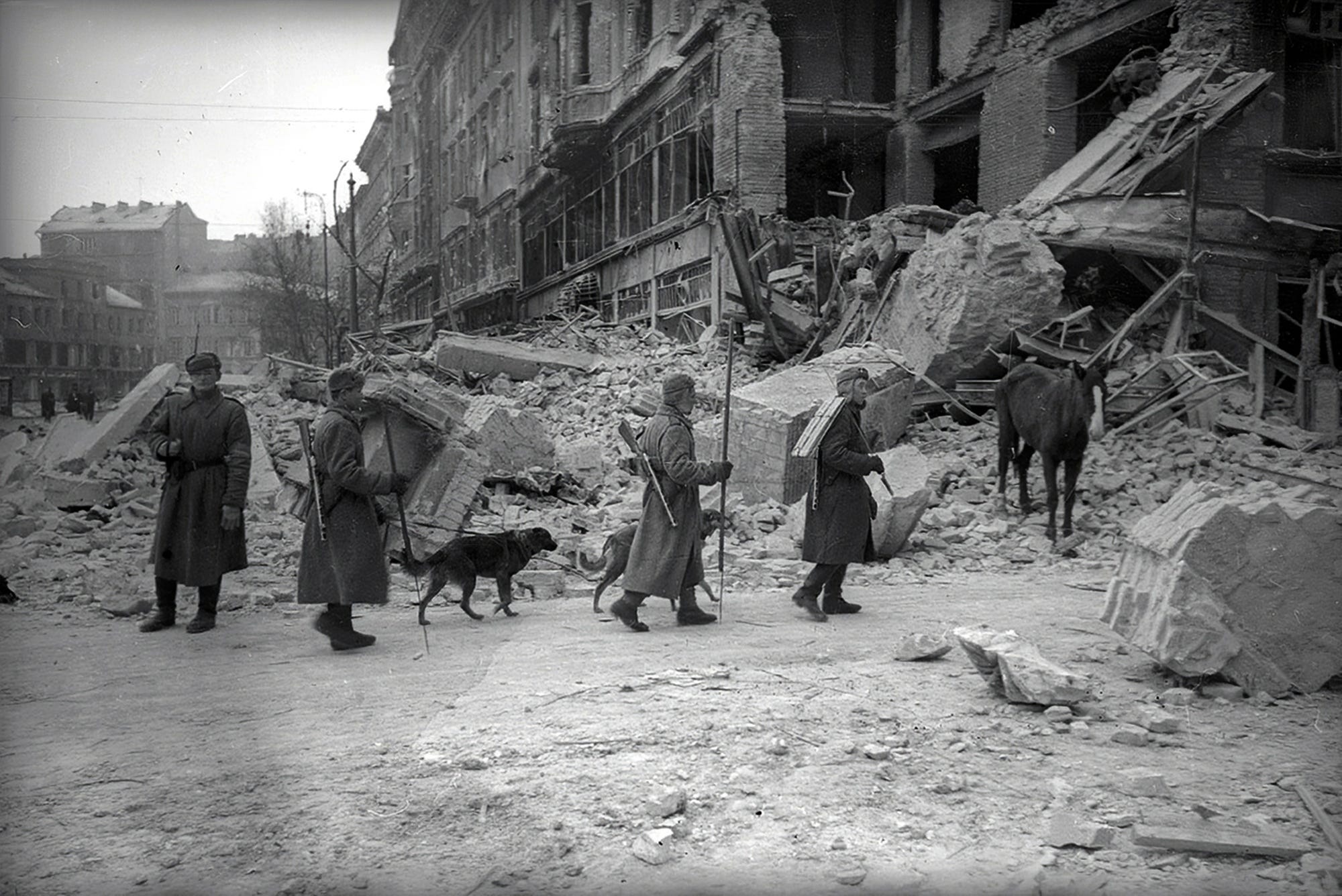
There were the stories about going upstairs to grab something during a lull in the fighting, only for gunfire to re-start with full force as they were crawling back to the shelter. About burying dead horses in the planter strip in front of the house. (There were dead horses everywhere: the Hungarian army’s logistics relied on horse-drawn transport quite heavily, not least because of fuel shortages. Except in the surrounded city there was no horse feed, either, and also nowhere for the horses to go. Some of them were eaten by starving civilians.) About a family being escorted out by armed militiamen and the father and two children returning after the mother had been shot just outside. They were from a Christian and, on the mother’s side, Jewish background; they somehow managed to avoid being sent to the ghetto, but someone in the basement denounced them. There were stories about women barely escaping rape by Soviet soldiers a bit later, in February. These were told less frequently, and only to grown-ups, so I only heard them much later. Soldiers seem to have gang-raped others, brutally, but members of your immediate family always escaped. By the time you began to wonder, there was no one to ask. But then again, would you have asked? There were the stories about how the city was lucky to have had plenty of snow that winter—snow they could cook with and drink.
My grandmother talking about that winter 35 years earlier. Talking about it every day, it then seemed. Her stories were part of the oral history of the siege, which Ungváry samples in this recent piece, and at much greater length also in his book. We just never bothered to record her monologs.
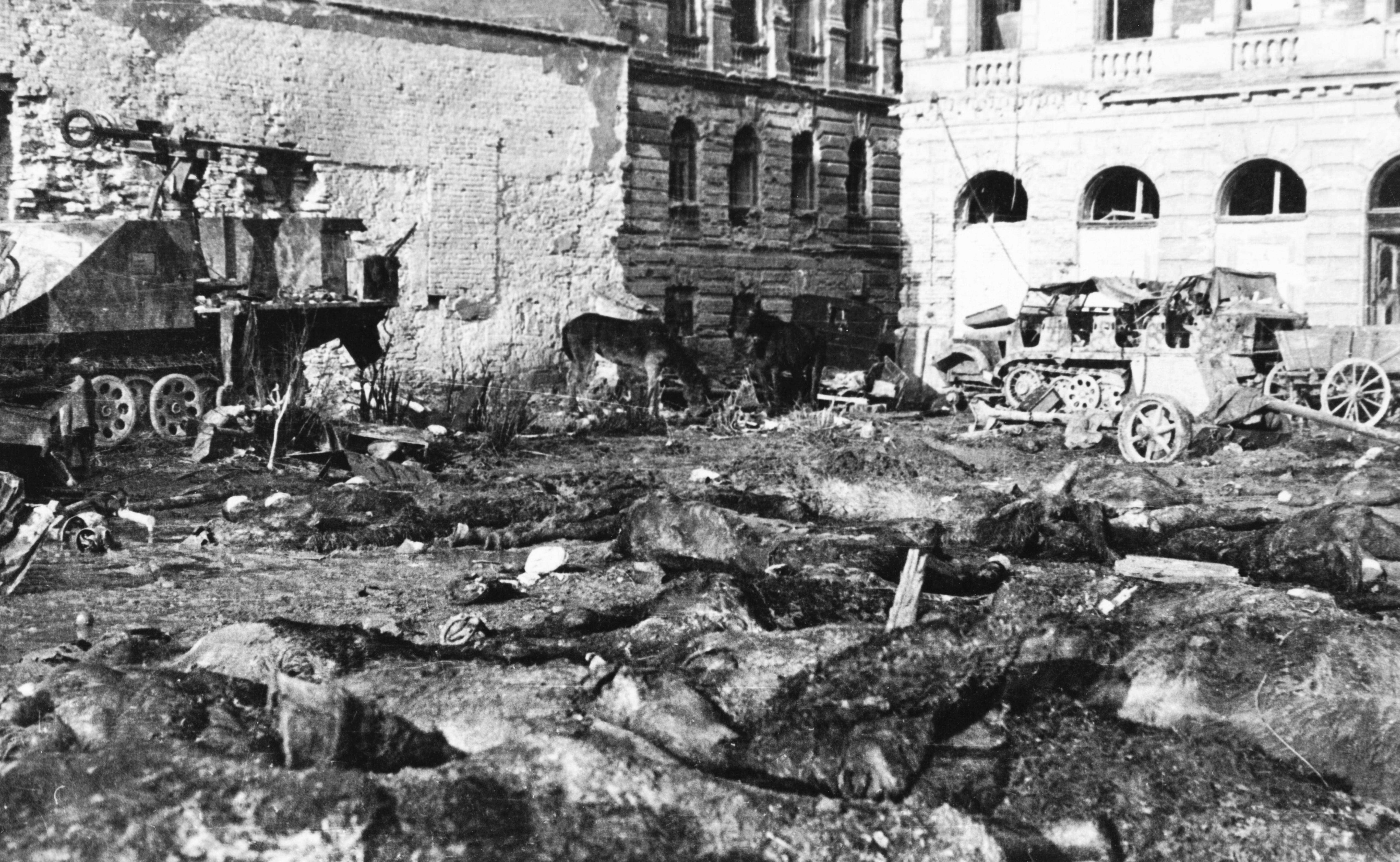
I was going to write more, but it is easier now to insert here a few pictures from Fortepan about our current neighborhood. The photos below are courtesy of the Red Army. I am not being sarcastic here: they employed professional photographers to create a meticulous record of the city they liberated / conquered, and those photos were donated to Fortepan. (I am forgetting how this happened, through what intermediary, I think it was the City of Budapest.)
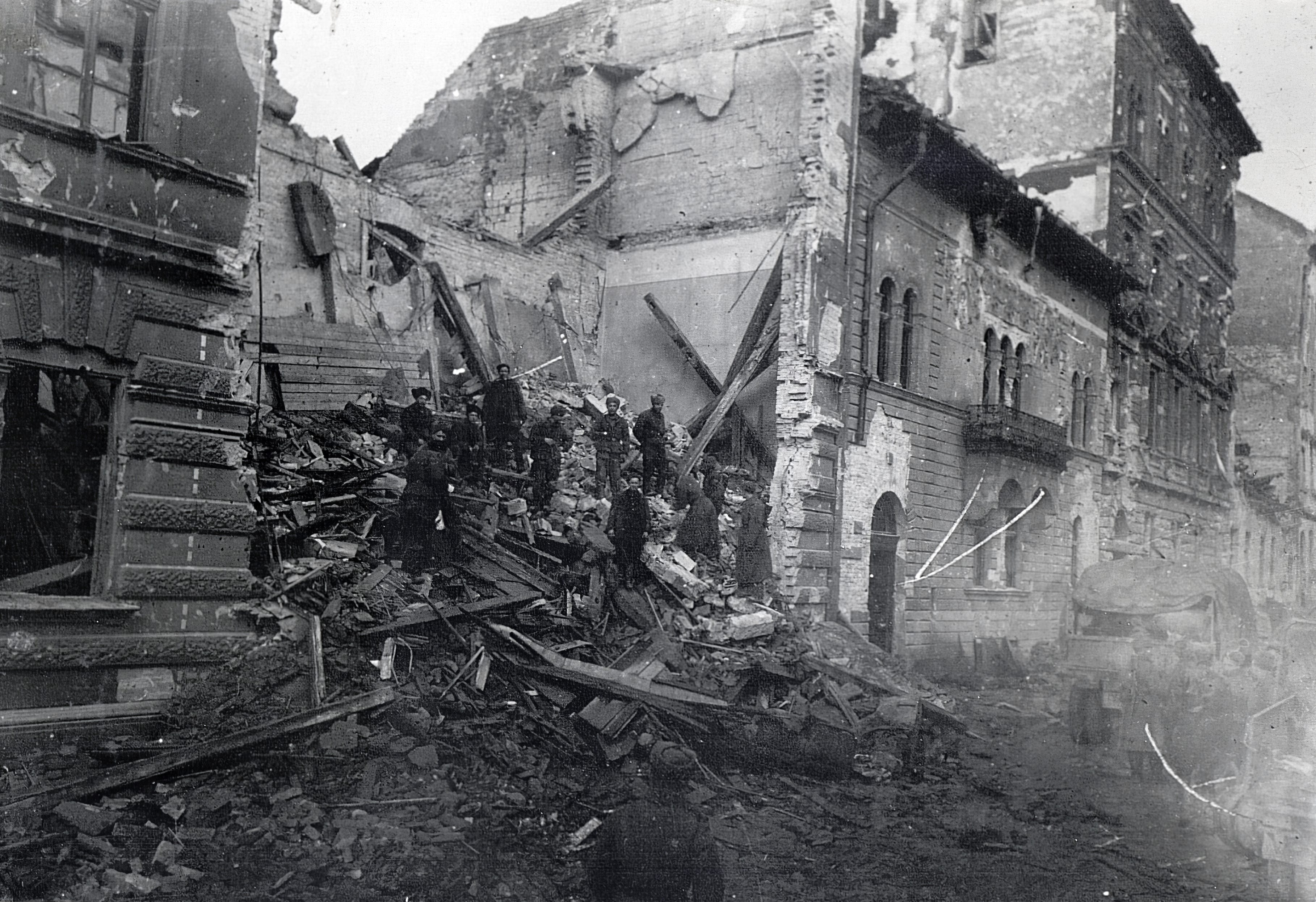
People who survived the siege talked about its end as “when we came up from the basement.” Amikor feljöttünk a pincéből. In the district where my mom spent those weeks, and also in the nearby district where we now live, this was after mid-February. The pictures that we have show the result of those endless weeks early in 1945. Of the process of the destruction: the siege itself, there are hardly any photos.
This is what our block looked like in spring 1945:
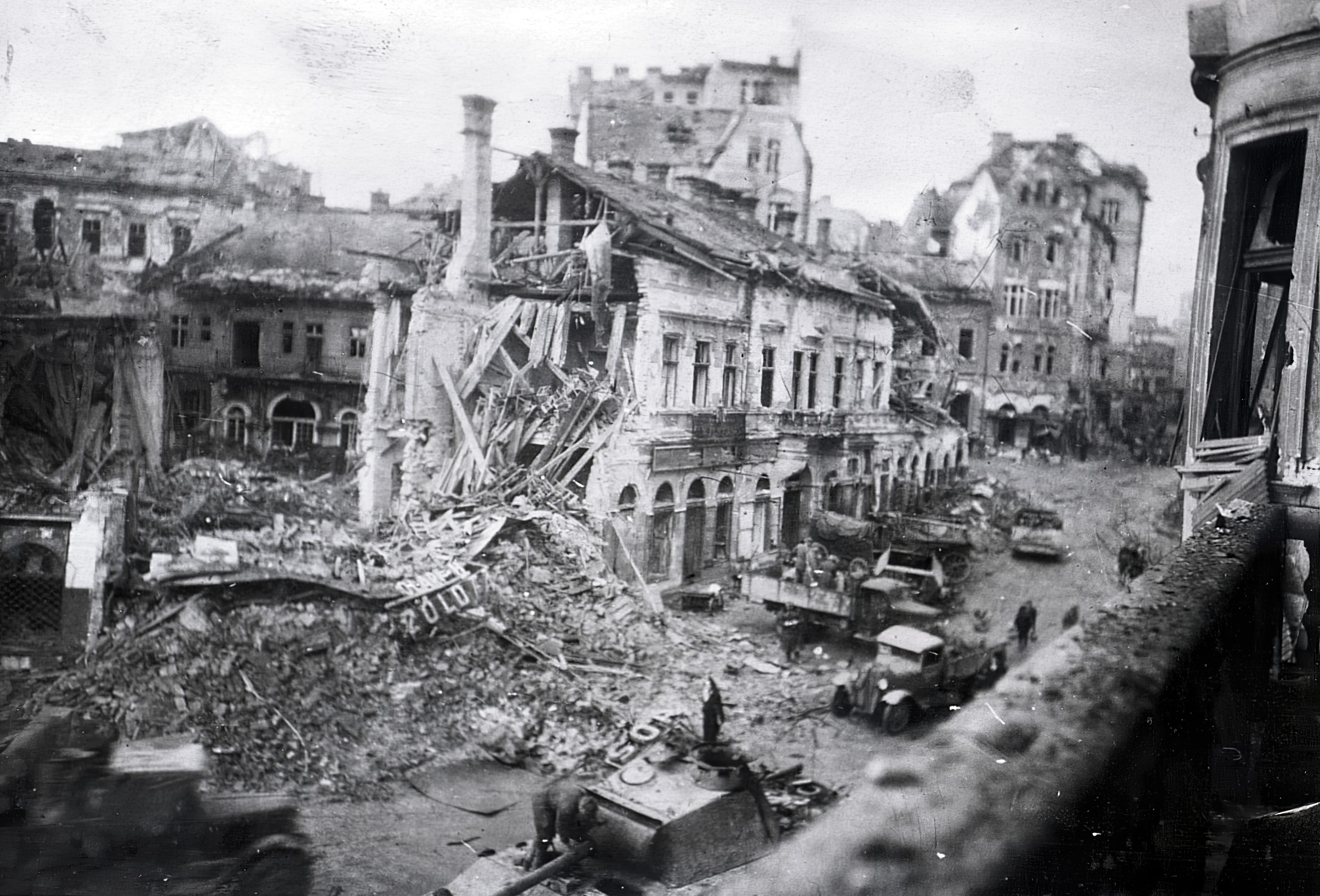
The next photo is of the intersection where our tram stop is. The neat pile of rubble is what was left of the 18th-c. inn Zöldfa (Green Tree). You can see part of the sign (ZÖLD) on top of the heap. Cleaning up has clearly started already.
The park at the end of our street.
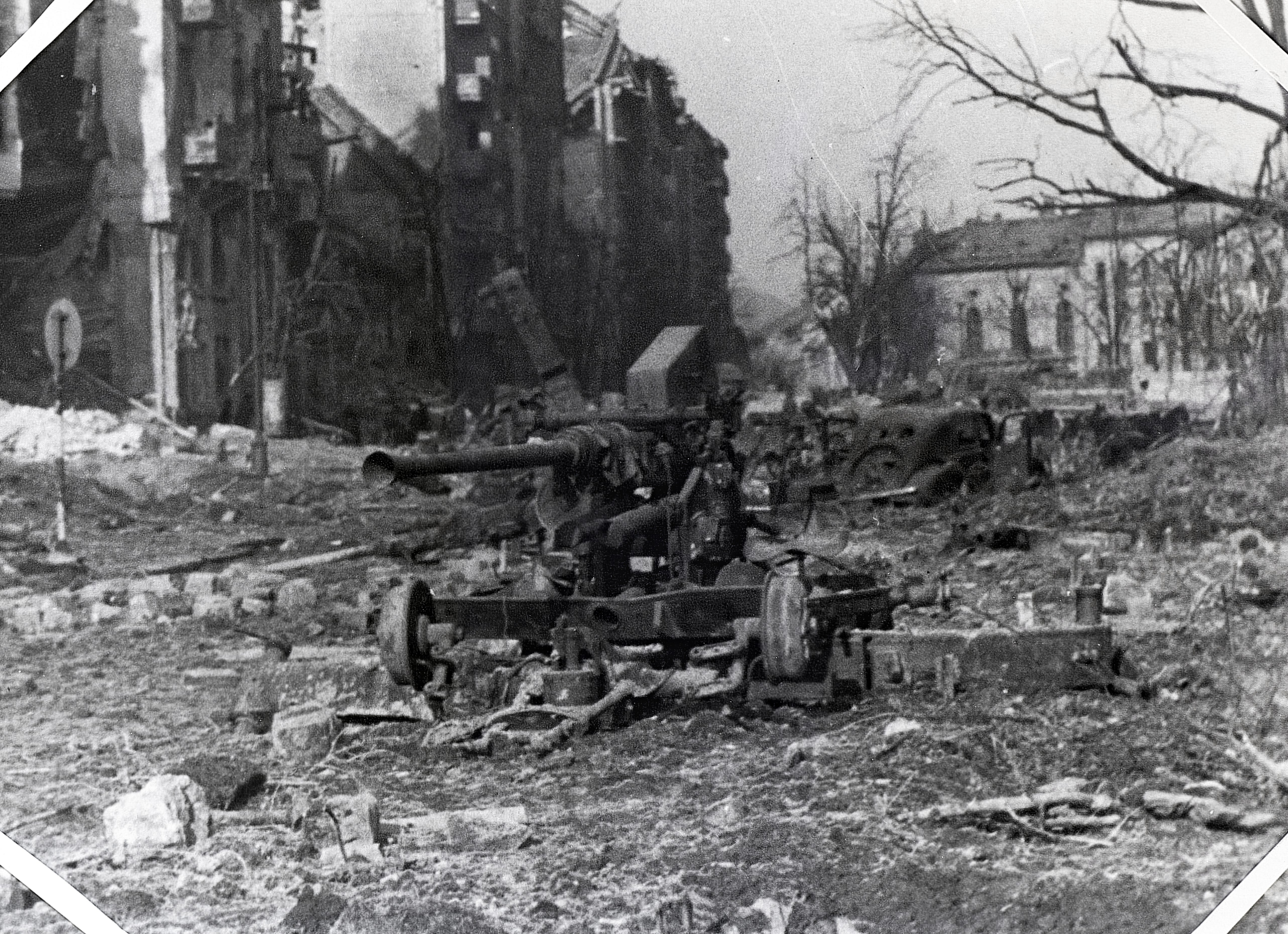
The park at the other end of the street. It served as a landing strip for planes delivering ammunition to the German and Hungarian troops over the Soviet lines.
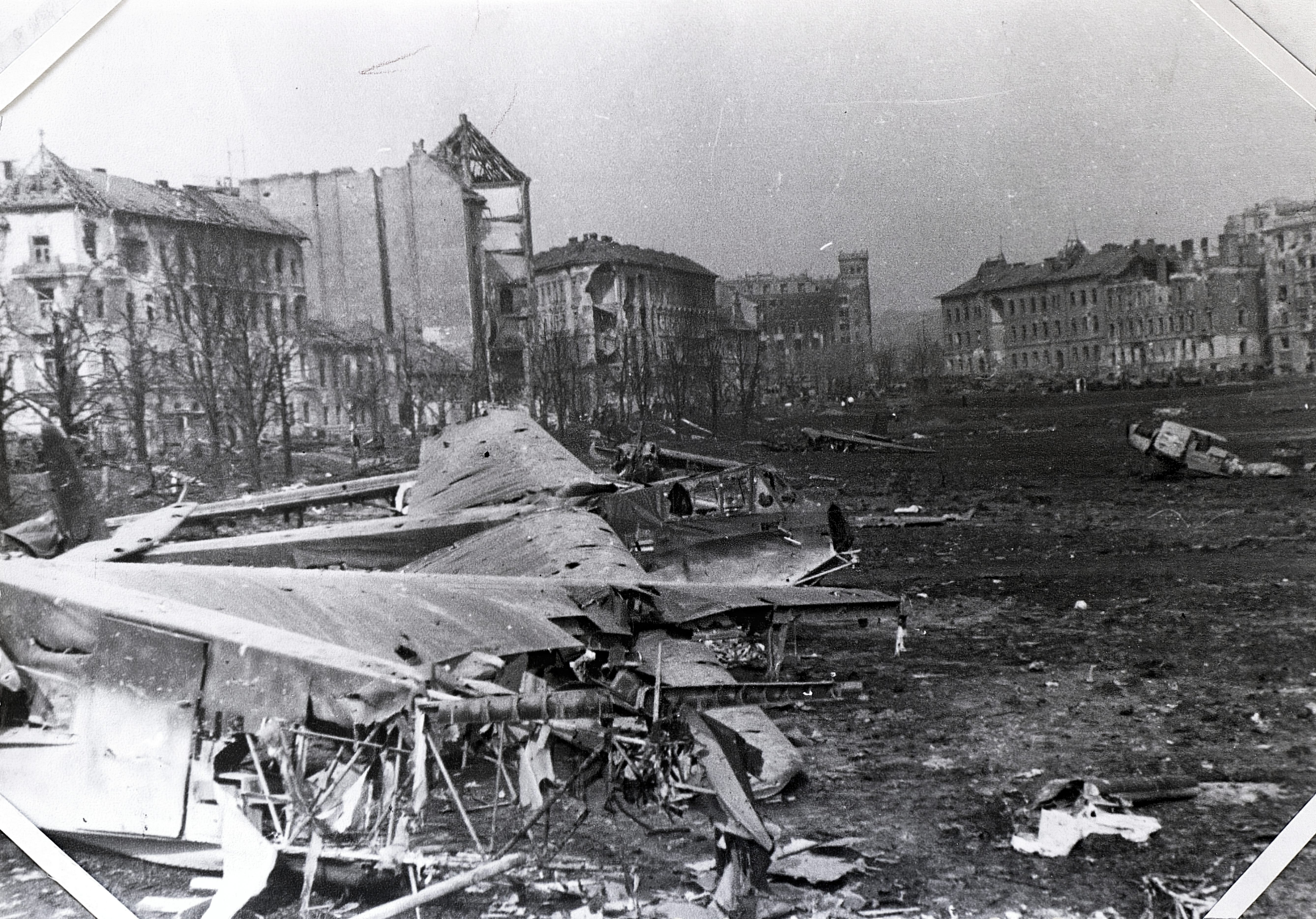
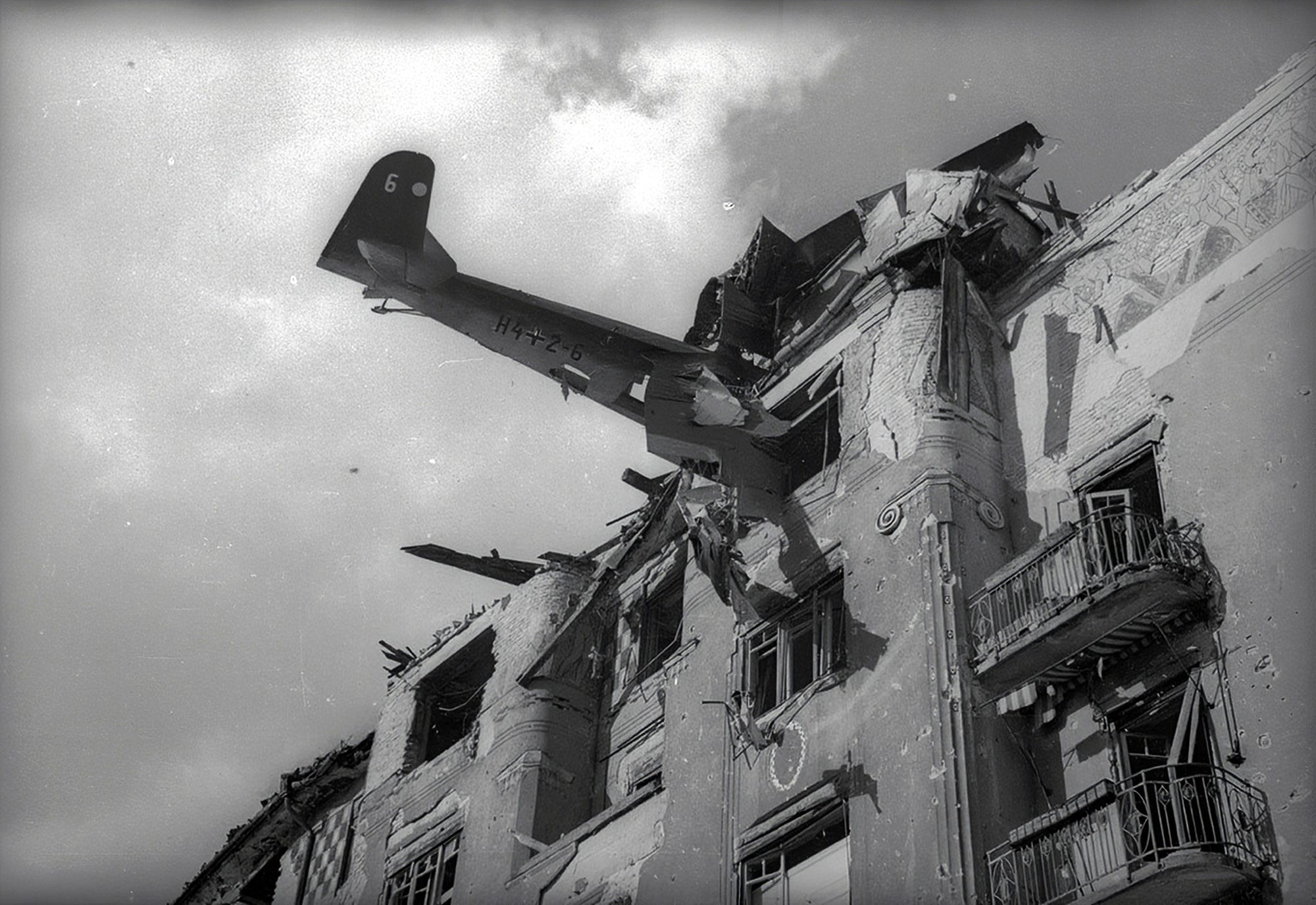
They used sailplanes, which sometimes missed the improvised airfield. This particular plane was perhaps the most photographed object in Budapest in Spring 1945.
Across the Danube, the Pest side of the city sustained less damage, fighting was over by mid-January. The Soviets started to scope out the area. In some pictures, the occupying army looks almost cute.
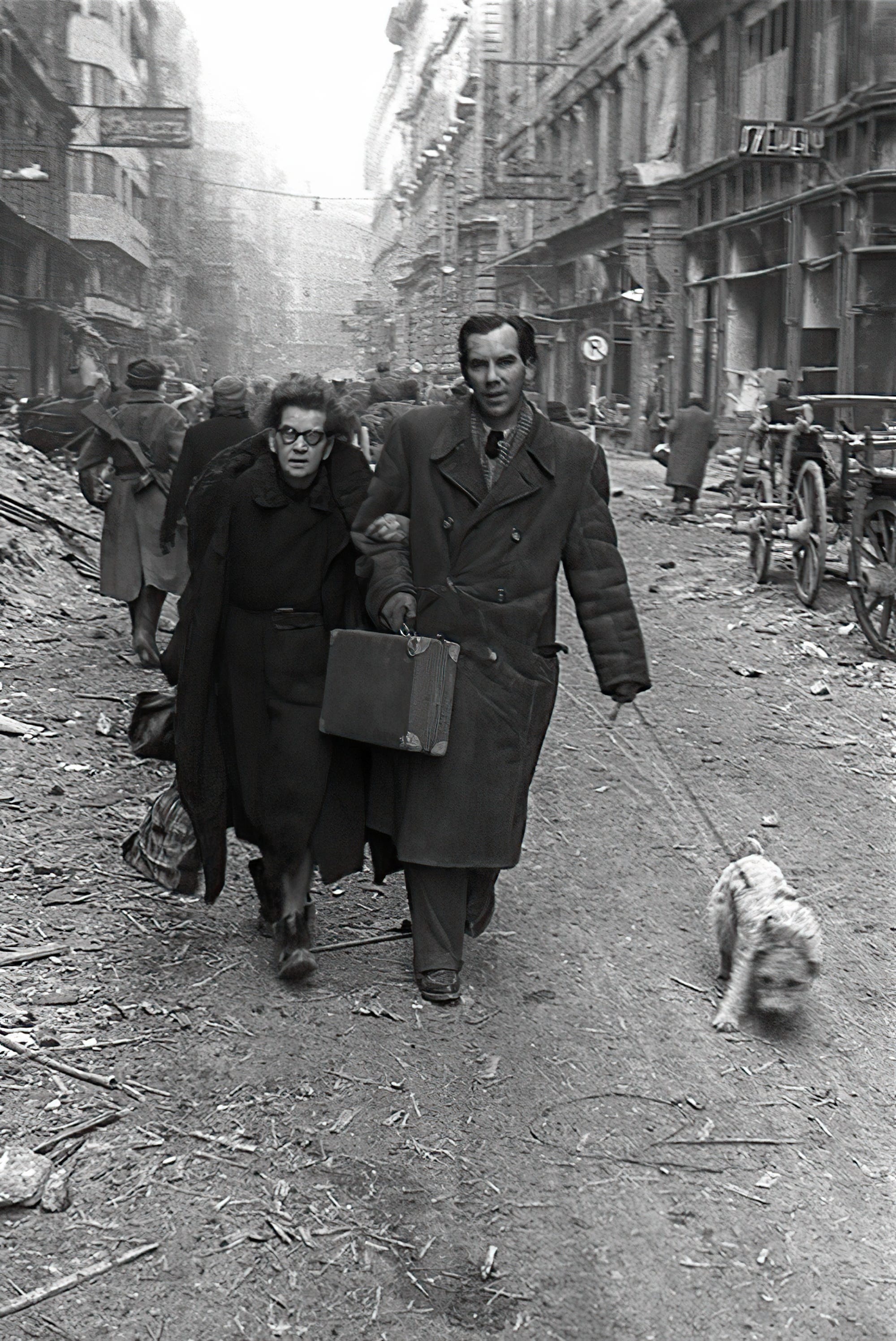
Soon, people started to find their way home, and the Red Army photographers started taking pictures of them and their city.

Thank you for sharing this reflection and the photos. In March 2022 I translated an essay by Ryszard Kapuściński that was sadly absent from the Penguin edition of the essay collection I was reading (Busz po polsku / Nobody Leaves). The essay in question was written in 1984 and added by Kapuściński to a re-edition of the volume. In it, he thinks through the desire to forget the war experience, to bury it, make it impossible to share -- to make innocence possible. I translated it for myself, to think together with him. Everything that is worth both saying and burying about the war is so different and distant from the war's Hollywood image that I fear it is unimaginable for those who trust that image. And so, whether articulated with great pain or unsaid, it is assumed irrelevant.